|
|
|
|
|
|
Functions and Applications of Piezoelectric Tubes |
|
|
13 July, 2017 |
Piezo Ceramic |
|
|
|
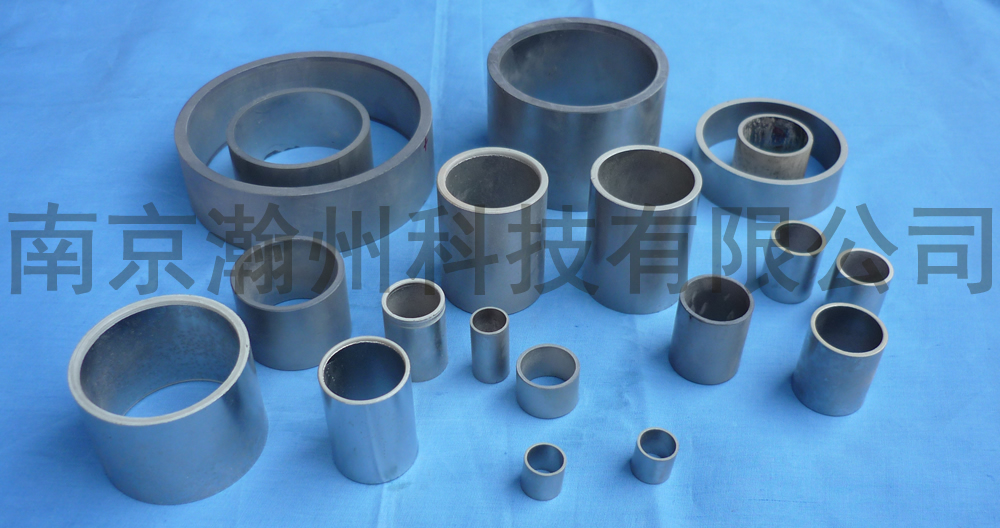
Piezoceramic tubes are functional ceramic devices that use the piezoelectric effect to turn electrical energy into mechanical movement and vice versa. The main material is lead zirconate titanate (PZT). When an alternating electric field is applied, the crystal structure inside the material changes shape, causing mechanical vibration (inverse piezoelectric effect). On the other hand, mechanical vibration can also produce electrical charges (direct piezoelectric effect). This reversible electromechanical coupling means that a piezo tube can work as an actuator to turn electricity into displacement or vibration, or as a sensor to turn mechanical signals into electrical ones. These products come in various shapes—sheets, rods, tubes, etc. The tubular form, with its hollow structure, ability to deform in multiple directions, and ease of integration, plays an important role in underwater acoustics, medical devices, precision manufacturing, and many other areas.
Types of Piezoceramic Tubes
Piezoceramic tubes can be grouped by polarization direction, geometric shape, and material composition.
1) By polarization direction – this is the most basic way to classify them. According to the polarization axis, there are three main types: radially polarized, axially polarized, and tangentially polarized.
Radially polarized tubes have polarization along the wall thickness (from inner wall to outer wall or the other way). They are fully polarized, have high strength, and high sensitivity, making them the most widely used type. When working in radial vibration mode, their electromechanical coupling factor is relatively low, but they perform well in thickness vibration mode.
Axially polarized tubes have polarization along the tube's length, suited for applications that need longitudinal vibration.
Tangentially polarized tubes have polarization along the circumferential direction, but they are hard to fully polarize and have weaker polarization strength.
In terms of resonance, a tubular piezoceramic has at least two resonant frequencies—axial and radial. The radial resonant frequency is closely related to the outer diameter and wall thickness.
2) By geometric structure – tubes are classified by wall thickness, diameter size, and electrode layout.
Piezoelectric tubes can have either thin walls or thick walls. Their outer diameters vary widely, from less than 1 millimeter for very small tubes up to over 150 millimeters for large ones. The electrodes on the tube surface can be arranged in different ways: they may cover the whole surface, be split into separate sections (such as four or eight parts), or wrap around the outside of the tube. One special design uses several independent electrode zones on the outer wall, so that by driving pairs of opposite sections, the tube can bend or move sideways in different directions.
3) By material system – the main material is modified PZT, with piezoelectric constant d33 reaching 500–600 pC/N and Curie temperature above 300°C, suitable for a wide temperature range. PZT can be doped to improve performance for specific needs. Also, to meet environmental requirements, lead-free piezoceramics (like potassium sodium niobate and bismuth titanate systems) are becoming an important trend. Besides PZT, materials like PMN (lead magnesium niobate) are also used in some special applications.
Vibration Modes of Piezoelectric Tubes
The vibration behavior of a piezo tube directly determines what it can do. Different vibration modes suit different uses. The main modes include radial vibration, axial (longitudinal) vibration, bending vibration, and coupled vibrations of these.
1) Radial vibration – this is one of the most basic modes. A typical tube's radial vibration is a breathing mode where the wall expands and contracts evenly in all directions. In this mode, all points on the wall move in phase radially, giving high radiation efficiency. This is the most common working mode for underwater acoustic transducers. Piezoceramic tube transducers are simple to build, stable in operation, and have no directional preference in the horizontal plane, so they are widely used in underwater communication and sonar.
2) Axial (longitudinal) vibration – this is the stretching and shrinking of the tube along its length. When voltage is applied, the tube lengthens or shortens. Axial vibration often occurs together with radial vibration, and they are coupled. In stacked tubular structures, thin-wall piezoelectric stacks made of longitudinally polarized elements can use this coupling to achieve broadband transmission.
3) Bending vibration – this is another important mode. When the tube stack is long, the pure breathing mode no longer exists; radial vibration has nodes along the height, showing axisymmetric bending. In this mode, there are multiple vibration nodes and out-of-phase areas on the surface, which greatly reduce radiation efficiency. So, in tube-stack transducer design, the height-to-diameter ratio must be kept small to avoid too much bending. On the other hand, bending vibration can be used on purpose—for example, in ultrasonic motors, a piezo tube with masses at both ends uses bending as its main working mode; in scanning force microscopes and scanning tunneling microscopes, a cantilevered piezo tube fixed at one end uses bending for micro-scanning.
4) Coupled vibration – this is a key point to note. In a tube transducer, longitudinal and radial vibrations often have opposite phases. When the tube shrinks radially, it extends in height, so the sound radiation from the radial and height directions are out of phase. Although the radiating area in the height direction is very small, this opposite-phase vibration still lowers efficiency. To solve this, foam decoupling material can be placed at both ends to shield the axial radiation and only use radial radiation. The vibration and radiation properties depend largely on the height-to-diameter ratio. When this ratio is small, the two resonant frequencies are far apart, and the lower-frequency peak is pure radial vibration. As the ratio increases, the longitudinal resonant frequency drops quickly, and coupling becomes stronger. If used wisely, this coupling can actually help widen the working bandwidth.
Industry Applications of Piezo Tubes
1) Underwater acoustics – this is the oldest and most mature application. Piezoceramic tube transducers are widely used in underwater navigation, ocean exploration, and sonar systems. Piezo tube hydrophones are highly sensitive acoustic sensors for detecting, communicating, and measuring underwater targets. In deep-sea use, thick-wall PZT-4 tubes serve as sensing elements, working from 20 Hz to 20 kHz at depths up to 5,000 meters. By connecting two ceramic elements in series and using high-strength composite foam decoupling, the hydrophone can withstand high pressure. In pipeline leak monitoring, piezo tube hydrophones are placed along pipes to listen for leak noise, and the signal helps locate the leak and estimate its size. Also, piezo tubes are made into towed array sonar hydrophones, with two radially polarized tubes aligned coaxially and electrodes wired in series, used in sonar and marine geophysical surveys.
2) Medical and healthcare – this is the fastest-growing area in recent years. Ultra-small piezo components—outer diameter less than 1 mm, with tolerances within 50 microns—make minimally invasive surgery possible. Intravascular ultrasound (IVUS) is a typical diagnostic use. A tiny high-frequency ultrasound transducer is mounted on a thin catheter and rotated inside coronary arteries to scan and image. Micro piezo tubes with segmented electrodes can deflect radially and axially, scanning in the XY plane. In scanning fiber endoscopes, small piezo tubes drive an optical fiber to vibrate at resonance, moving in spiral or Lissajous patterns to produce wide-field color images. These small endoscopes not only provide high-definition laser video for minimally invasive surgery but also open up new possibilities for biotech applications. Interventional therapy is a more challenging use. Modern intravascular lithotripsy uses piezo-driven ultrasound catheters that can identify and treat the cause of arterial fibrillation with targeted lesions, providing a non-contact way to break down calcified plaques in blood vessels. These devices must be very compact yet reliable and efficient. Piezo components are also used in new scanning catheter endoscopes, micro-dosing regulators, intravascular calcium ablation, renal sympathetic denervation, and active implants for controlling eye pressure. Small piezo transducer plates for micro-dose and nano-dose pumps respond almost instantly to drive signals, enabling high-frequency pumping and accurate dose control.
3) Industrial precision manufacturing – thanks to high precision and fast response, piezo tubes excel in inkjet printing, microfluidic control, and precision positioning. Inkjet printing is one of the most representative industrial uses. Piezo inkjet printheads use the inverse piezoelectric effect to radially squeeze the tube, controlling droplet ejection. When voltage is applied, the tube wall deforms, creating a pressure pulse in the ink chamber that shoots a tiny amount of ink through the nozzle. Droplet generators driven by piezo tubes can produce stable droplets on demand with just a dozen volts; a nozzle of 40 microns can easily make droplets as small as 2 microns. This technology is widely used in microelectronics manufacturing, prototyping, bioengineering, and more. Microfluidics and precision positioning are another major industrial field. The special contact and control of a piezo tube can generate targeted pressure pulses to precisely deliver picoliter-level liquids from a capillary. These high-precision, ultra-fast motions are used in many applications—from micro-dose dispensing, to accurate positioning of tiny objects, to glass fiber manipulation and ultrasonic generation. In precision positioning, a single piezo tube can achieve XYZ micro-displacement; scanning stages driven by multiple tubes can reach nanometer-level resolution. These stages, with their high accuracy, fine resolution, good frequency response, and immunity to magnetic interference, are the core of precision positioning technology.
4) Sensing and structural health monitoring – piezo tubes also play an important role here. Using the direct piezoelectric effect, they convert mechanical vibration, pressure changes, and other physical quantities into electrical signals for highly sensitive detection. For structural health monitoring, tubular sensors overcome the limitations of flat sensors, which are hard to install and only detect one-dimensional damage. Smart aggregate devices based on piezoceramics can monitor concrete structures in real time, detecting micro-cracks inside and on the surface, as well as interface debonding in concrete-filled steel tubes. Tubular sensors can excite and collect signals in both axial and radial directions, making them suitable for monitoring pipe-shaped concrete structures during construction and service. For long-distance pipelines, piezo sensing is an important tool for ensuring the safety of energy supply systems.
Besides these, piezo tubes are also used in fiber-optic sensors, electro-optic modulators, optical alignment, bubble detection, flow metering, and many other areas. With their unique electromechanical coupling, diverse vibration modes, and flexible designs, piezo tubes play an irreplaceable role in fields ranging from deep-sea exploration to human blood vessels, from precision printing to structural monitoring. As materials science advances—with lead-free piezoelectrics and higher piezoelectric constants—and microfabrication improves—enabling mass production of sub-millimeter ultra-small tubes—the application boundaries keep expanding. From underwater transducers to intravascular ultrasound catheters, from industrial inkjet heads to structural health sensors, piezo tubes truly demonstrate how small components can drive large systems, continuously empowering modern technology and innovation.
|
|
|
« Back |
|
↑ Top |
|
|
|
|
 Home
Home Downloads
 Sitemap
 Contact